Buying a ready-to-move apartment is an exciting milestone, especially for homebuyers who want to avoid construction delays and move into their new homes without waiting for project completion. However, purchasing a completed apartment does not mean that buyers should overlook construction quality.
A property may look attractive during a site visit, but its actual condition depends on several factors, including structural integrity, waterproofing, electrical installations, plumbing, ventilation, flooring, and finishing standards.
Before investing in a home, buyers should carefully inspect these elements to identify potential defects and understand whether the property is suitable for long-term living.
For people exploring Ready to Move Apartments in Dehradun, evaluating construction quality is particularly important. Understanding the condition of the building, the quality of materials, and the maintenance of common areas can help buyers make a more confident purchasing decision.
Here is a practical guide to checking construction quality before finalising a ready-to-move apartment.
1. Start by Inspecting the Overall Building Structure
The structural condition of a building is one of the most important aspects to evaluate before purchasing an apartment. Although buyers cannot assess the entire structural system through a visual inspection, they can look for visible warning signs that may require professional evaluation.
During your site visit, pay attention to:
- Visible cracks in walls, ceilings, and columns.
- Uneven floors or noticeable slopes.
- Signs of water damage near structural elements.
- Exposed reinforcement steel.
- Deterioration of concrete surfaces.
- Unusual settlement or deformation.
Not every crack indicates a structural problem. Minor surface cracks can occur due to plaster shrinkage or temperature changes. However, wide, recurring, diagonal, or expanding cracks should be assessed by a qualified structural engineer.
2. Check Wall Finishing and Plaster Quality
Walls contribute significantly to the overall appearance and durability of an apartment. Poor plastering, uneven surfaces, and low-quality finishing can affect the property’s appearance and may indicate inadequate workmanship.
Check the following areas carefully:
- Surface Uniformity: Walls should have smooth and even surfaces without noticeable bumps, depressions, or irregular patches.
- Paint Quality: Look for peeling paint, uneven colour, stains, and visible patches.
- Dampness: Examine corners, external walls, and areas near bathrooms for moisture marks.
- Cracks: Check around doors, windows, and wall joints for visible cracks.
- Wall Alignment: Look for unusually uneven corners or poorly finished wall intersections.
Pay particular attention to walls adjoining bathrooms and kitchens, as these areas are more exposed to moisture. If you notice damp patches, ask the developer or maintenance team to identify their source rather than simply covering them with fresh paint.
3. Inspect Waterproofing in Bathrooms and Balconies
Waterproofing is an essential part of apartment construction because leakage can damage walls, ceilings, flooring, and neighbouring properties. Bathrooms, balconies, utility areas, and terraces are particularly vulnerable to water seepage.
During inspection, consider these checks:
- Look for damp patches on bathroom walls.
- Inspect the ceiling below bathrooms, if accessible.
- Check the joints between tiles and sanitary fittings.
- Examine balcony flooring and drainage outlets.
- Look for peeling paint or bubbling plaster.
- Check whether water drains properly towards the floor outlet.
You can also request a demonstration of the water drainage system. For a more detailed assessment, a professional inspection may include appropriate moisture testing or waterproofing checks. Water leakage should never be treated as a minor cosmetic issue because unresolved seepage can lead to recurring maintenance problems.
4. Examine Flooring and Tile Installation
Flooring is another important indicator of finishing quality. Poor tile installation can result in uneven surfaces, hollow sounds, cracked tiles, and problems with floor drainage.
During your inspection:
- Check whether the flooring appears level.
- Look for cracked or chipped tiles.
- Examine gaps between adjoining tiles.
- Check whether tile joints are properly filled.
- Look for uneven transitions between rooms.
- Inspect skirting and corner finishing.
A simple preliminary check is to gently tap selected tiles with a suitable object. A hollow sound may indicate inadequate bonding, although it does not automatically confirm a defect.
Also inspect bathroom flooring to ensure that water flows towards the drainage outlet rather than collecting in corners. If significant unevenness or loose tiles are present, request professional assessment and rectification.
5. Test Electrical Installations and Safety Features
Electrical installations directly affect the safety and convenience of everyday living. Even if an apartment has attractive interiors, poor electrical workmanship can create serious problems after possession.
Check the following:
- Switchboards: Examine switches, sockets, and electrical plates for loose fittings or visible damage.
- Lighting Points: Test available lighting connections and fixtures.
- Circuit Protection: Ask about the distribution board, circuit breakers, and electrical safety arrangements.
- Earthing: Confirm that appropriate earthing arrangements have been installed.
- Power Backup: Understand which areas and appliances receive backup power.
- Wiring Documentation: Request relevant electrical specifications and available installation records.
Do not open electrical panels or attempt to inspect live wiring yourself. Ask a qualified electrician to conduct detailed testing where necessary.
6. Evaluate Plumbing and Water Supply Systems
A properly installed plumbing system ensures a reliable water supply and prevents leakage-related problems. During the inspection, test different water outlets throughout the apartment.
Important checks include:
- Water pressure in bathrooms and kitchens.
- Hot and cold water connections, where provided.
- Leakage around taps and fittings.
- Proper drainage from washbasins.
- Toilet flushing functionality.
- Kitchen sink drainage.
- Condition of visible plumbing connections.
Ask about the building’s water source, storage arrangements, water treatment facilities, and backup supply. If the apartment has been vacant for a long period, run the taps and inspect the plumbing carefully before taking possession.
7. Check Doors, Windows, and Ventilation
Doors and windows influence security, ventilation, natural lighting, and indoor comfort. Poorly installed frames or low-quality fittings may cause inconvenience over time.
Inspect these components individually:
- Doors: Check whether doors open and close smoothly, locks function properly, and hinges are firmly fitted.
- Windows: Look for gaps, damaged seals, and loose handles.
- Glass Panels: Inspect for cracks, scratches, and installation defects.
- Ventilation: Ensure that bedrooms, kitchens, and bathrooms have suitable ventilation arrangements.
- Natural Lighting: Observe how much daylight enters the apartment during different times of the day.
Also check whether external windows and balcony doors provide adequate protection against rainwater entering the property.
8. Assess Kitchen and Bathroom Fittings
Kitchens and bathrooms are among the most frequently used areas in a home. Their finishing quality can significantly influence everyday convenience and future maintenance expenses.
In the kitchen, inspect:
- Countertop material and finishing.
- Sink installation and drainage.
- Cabinet hinges and handles.
- Wall tiles and joints.
- Plumbing connections.
- Electrical points for appliances.
In bathrooms, check:
- Sanitary fittings.
- Shower installations.
- Washbasin connections.
- Floor slope and drainage.
- Exhaust ventilation.
- Waterproofing and tile joints.
Open and close cabinet shutters, operate taps, and test fittings wherever possible. Do not assume that premium-looking fixtures automatically indicate high-quality installation.
9. Inspect Common Areas and Building Infrastructure
Construction quality should not be evaluated only inside the apartment. The condition of common areas also reflects the building’s overall maintenance and construction standards.
Inspect:
- Entrance and Lobby: Check flooring, lighting, wall finishes, and overall upkeep.
- Lifts: Understand the number of lifts, their maintenance arrangements, and backup provisions.
- Staircases: Look for proper lighting, handrails, and safe access.
- Parking Areas: Check flooring, drainage, ventilation, and allocated parking arrangements.
- Water Storage: Ask about underground and overhead water tanks and their cleaning schedules.
- Fire Safety: Verify applicable fire safety approvals, firefighting systems, emergency exits, and maintenance arrangements.
- Drainage: Examine the building’s drainage system and ask how rainwater is managed.
For residential developments in Dehradun, it is also worth evaluating how the building and surrounding infrastructure handle seasonal rainfall.
10. Understand Construction Materials and Specifications
The quality of materials used during construction can influence durability, maintenance requirements, and overall property performance. Ask the developer for the project’s specifications and compare them with what is actually installed in the apartment.
Important materials and components to review include:
| Component | What to Check |
| Concrete | Relevant structural specifications and quality records |
| Steel | Approved reinforcement specifications |
| Flooring | Tile or stone quality and installation |
| Doors | Material, fittings, and durability |
| Windows | Frame quality, glazing, and sealing |
| Electrical | Wiring specifications and safety systems |
| Plumbing | Pipe materials and installation standards |
| Paint | Finish, durability, and surface preparation |
| Waterproofing | System specifications and warranty details |
If available, request quality assurance records, material specifications, and relevant construction documentation. A qualified technical professional can help interpret these records and identify discrepancies.
11. Check Legal Approvals and Completion Documents
A completed apartment should also have the necessary legal and regulatory documentation. Construction quality and legal compliance are separate considerations, and both should be evaluated before purchasing a property.
Ask for and verify applicable documents, including:
- RERA registration details, wherever applicable.
- Approved building plans.
- Land ownership and title documents.
- Applicable development authority approvals.
- Completion certificate, where required.
- Occupancy certificate, where applicable.
- Fire safety approvals, wherever required.
- Agreement for sale.
- Possession documentation.
- Applicable property tax and utility records.
For properties in Dehradun, buyers should verify the relevant approvals from the competent local authorities. It is advisable to have an independent property lawyer review the documentation before making the final payment.
12. Consider Hiring a Professional Home Inspector
While buyers can perform several basic checks themselves, certain construction defects are difficult to identify without technical expertise. An independent home inspection can help evaluate areas that may not be visible during an ordinary site visit.
Depending on the scope of inspection, a professional may assess:
- Visible structural concerns.
- Moisture and leakage.
- Electrical safety.
- Plumbing performance.
- Flooring and finishing defects.
- Door and window installations.
- Ventilation and drainage.
- Overall property condition.
A detailed inspection report can help buyers identify defects and discuss necessary repairs with the developer before accepting possession.
The cost of a professional inspection may be relatively small compared with the financial commitment involved in purchasing an apartment.
13. Prepare a Defect List Before Taking Possession
Before accepting possession, conduct a final walkthrough and prepare a written list of issues that require attention. This is commonly referred to as a snag list.
Your checklist should include:
- Cracked or damaged tiles.
- Paint defects.
- Loose electrical switches.
- Plumbing leakage.
- Faulty door locks.
- Damaged window fittings.
- Uneven flooring.
- Poorly finished corners.
- Bathroom drainage issues.
- Missing fixtures or fittings.
Take photographs and share the list with the developer through an appropriate written communication channel. Request a clear timeline for resolving the identified issues.
Where possible, obtain confirmation that the necessary rectifications have been completed before signing the final possession acknowledgement.
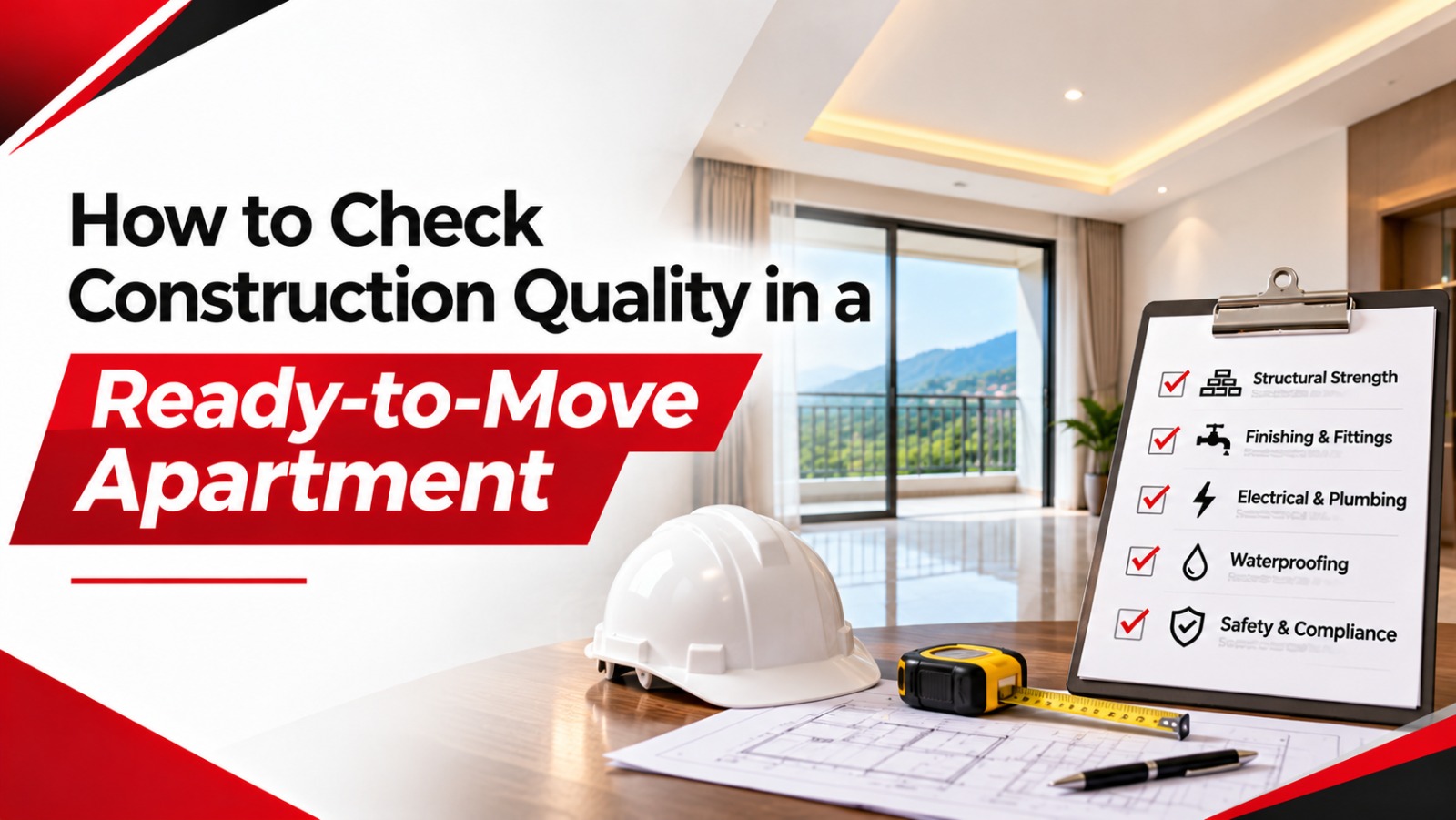
Ready-to-Move Apartment Construction Quality Checklist
Use this quick checklist during your property inspection.
| Inspection Area | What to Verify |
| Building Structure | Visible cracks and structural warning signs |
| Walls | Plaster, paint, and dampness |
| Waterproofing | Bathrooms, balconies, and leakage |
| Flooring | Level surfaces and tile installation |
| Electrical | Switches, sockets, and safety |
| Plumbing | Water pressure and drainage |
| Doors & Windows | Fittings, locks, and sealing |
| Kitchen | Countertop, cabinets, and plumbing |
| Bathrooms | Sanitary fittings and ventilation |
| Common Areas | Lifts, staircases, and parking |
| Fire Safety | Applicable approvals and equipment |
| Documentation | Legal approvals and completion records |
Conclusion
Checking construction quality is one of the most important steps when purchasing a ready-to-move apartment. A property may look beautiful from the outside, but its actual value as a comfortable home depends on structural condition, material quality, waterproofing, electrical installations, plumbing, and finishing standards.
For buyers exploring Ready to Move Apartments in Dehradun, a detailed inspection can help identify potential problems before completing the purchase. Taking the time to examine the apartment, verify documentation, and consult qualified professionals can prevent unexpected repair expenses and future inconvenience.