
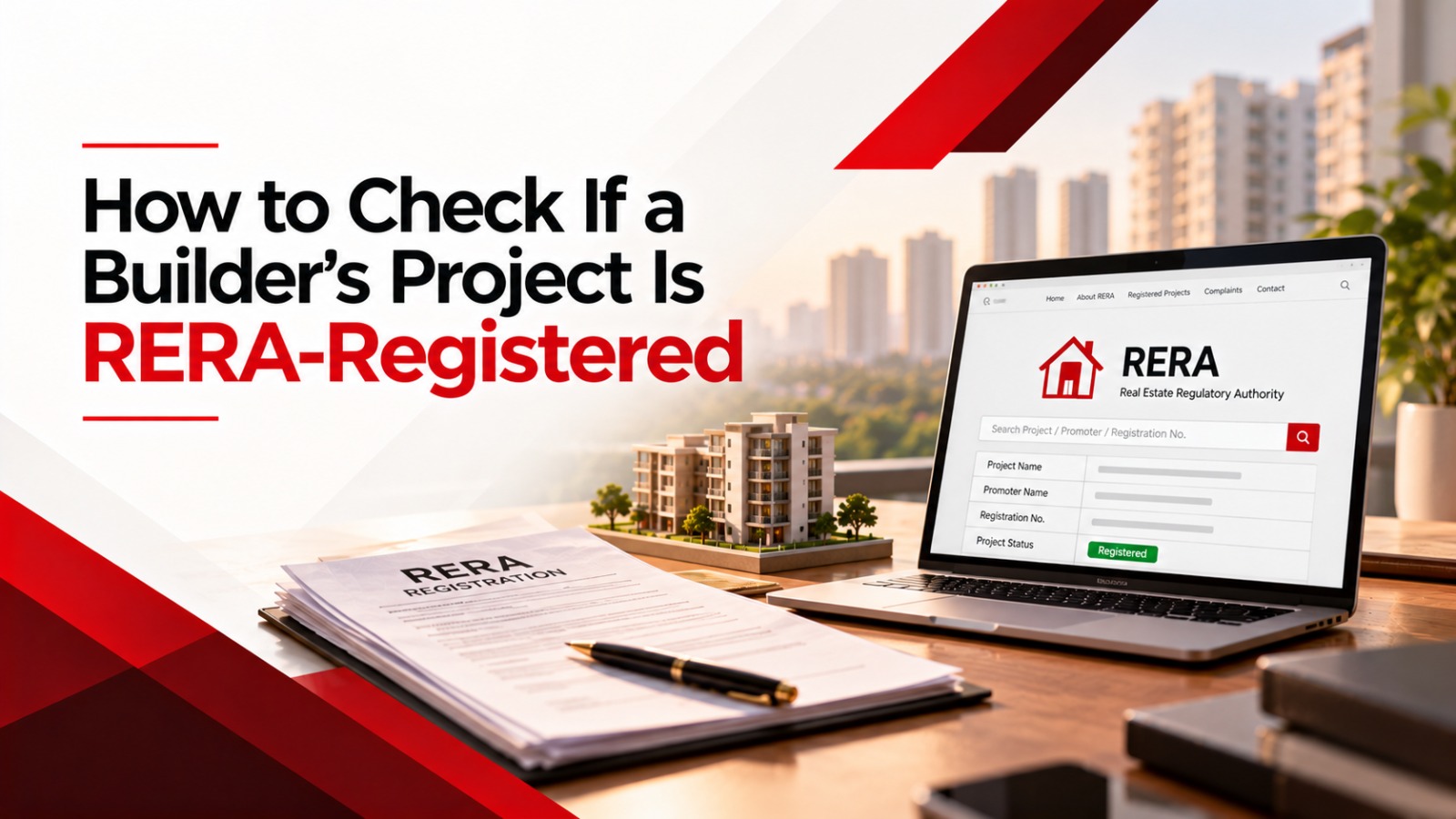
Buying a home is a major financial commitment, and verifying a property’s legal status should be one of the first steps before making a purchase. Whether you are planning to buy an apartment, invest in a residential development, or book a property under construction, checking whether the project is registered with the Real Estate Regulatory Authority (RERA) can help you make a more informed decision.
RERA was introduced under the Real Estate (Regulation and Development) Act, 2016, to improve transparency and accountability in India’s real estate sector. It establishes a regulatory framework for eligible real estate projects and agents, with the aim of protecting homebuyers and addressing certain industry practices.
However, many buyers are unsure where to find a project’s registration details, which documents to check, or how to identify potential discrepancies. This guide explains how to check whether a builder’s project is RERA-registered, how to verify the information provided by a developer, and what to consider before purchasing a property.
What Is RERA Registration?
RERA registration refers to the registration of an eligible real estate project with the relevant state or union territory Real Estate Regulatory Authority.
Under the RERA Act, promoters must register projects that fall within the applicable requirements before advertising, marketing, booking, selling, or offering them for sale, subject to the law’s provisions and exemptions.
Registration helps make important project information available to prospective buyers through the relevant authority’s records. Depending on the state portal and the project, this information may include the promoter’s details, project approvals, declared completion timeline, sanctioned plans, and other disclosures.
It is important to understand that RERA registration is not the same as a government guarantee of construction quality, investment returns, or timely possession. Buyers should still conduct independent legal and financial checks.
Why Should You Check a Builder’s RERA Registration?
Before investing in a residential project, verifying its registration can help you understand whether the developer has complied with the applicable registration requirements.
Here are some important reasons to check.
1. Verify the Project’s Registration Status
A project may be advertised online, through property agents, or on social media. Checking the relevant RERA portal helps you determine whether a registration record exists for the project.
You can compare the official record with the details provided in the brochure, advertisement, or booking documents.
2. Check the Builder’s Details
The official registration record may identify the promoter or development company responsible for the project. This helps buyers verify whether the company name and other available details match the information provided by the seller. It is particularly important when multiple companies, subsidiaries, or marketing partners are involved.
3. Review the Declared Project Timeline
The registration record may contain the project’s declared completion date and other timeline-related information.
Buyers can use this information to understand the declared schedule and compare it with the possession date mentioned in the sale documents. Any differences should be clarified with the developer before proceeding.
4. Review Available Project Disclosures
State RERA portals may provide access to project approvals, sanctioned plans, progress updates, and other disclosures, depending on the applicable rules and portal. These records can help buyers identify information that requires further verification.
5. Make a More Informed Purchase Decision
Checking registration details is an important part of due diligence, but it should not be your only check. Property ownership, land title, building approvals, construction quality, and the terms of the sale agreement also require attention.
How to Check If a Builder’s Project Is RERA-Registered
You can usually check a project’s registration status through the official RERA website of the state or union territory where the property is located.
Follow these steps.
Step 1: Identify the Correct State RERA Website
Every state or union territory with a relevant authority has its own registration and project-information system.
For a property in Dehradun, begin with the official Uttarakhand RERA website. For properties in Gurugram, use the Haryana RERA portal and select the appropriate jurisdiction.
Always use the official government or regulatory website rather than relying solely on third-party property listings.
Step 2: Open the Registered Projects Section
Look for a section labelled something similar to:
- Registered Projects
- Search Projects
- Project Registration
- Project Details
- Promoter or Project Search
If you cannot find the relevant section, use the portal’s official search function or navigation menu.
Step 3: Enter the Project Information
Depending on the portal, you may be able to search using one or more of the following details:
- Project name
- RERA registration number
- Promoter or builder name
- District or project location
If the builder has provided a RERA registration number, use it as the starting point. Searching by the exact number can help you identify the relevant project record more precisely.
If the project does not appear under its advertised name, try the promoter’s legal name or check the spelling of the project name.
Step 4: Open the Official Project Record
Once you find a matching result, open its details page. Check whether the project’s name, location, promoter, and registration number match the information supplied by the builder.
Step 5: Verify the Registration Details
Review the available information carefully, including:
- Registration number: Does it match the number shown in the builder’s documents?
- Project name and location: Are the details consistent with the property you intend to buy?
- Promoter details: Does the registered promoter match the relevant legal entity?
- Registration status: Does the portal show the project as registered, expired, revoked, or under another status?
- Declared completion date: Does it match the timeline communicated by the developer?
- Project disclosures: Are the available approvals, plans, and other records consistent with the information provided?
The status labels and available information vary by authority. If the registration has expired, been revoked, or shows another unexpected status, seek clarification from the authority and a qualified property lawyer before proceeding.
How to Check RERA Registration for a Property in Dehradun
If you are planning to purchase a property in Dehradun, use the official Uttarakhand RERA portal to look for the project’s registration record.
When evaluating Builders in Dehradun, do not rely exclusively on a company’s reputation, advertisements, or claims about its completed developments. Verify the registration status of the specific project you intend to purchase.
Pay particular attention to the following:
- The registered project name and exact location.
- The legal name of the promoter.
- The registration number and current status.
- The declared completion timeline.
- The availability of applicable approvals and sanctioned plans.
- Any available disclosures concerning project progress or extensions.
A builder may have completed several projects in the past, but that does not automatically establish the registration status or legal compliance of every new development.
If the information on the portal is incomplete or does not match the builder’s documents, contact Uttarakhand RERA or seek independent legal advice before making a financial commitment.
How to Check RERA Registration for a Property in Gurugram
For a property located in Gurugram, buyers should consult the official Haryana RERA portal and identify the relevant jurisdiction. Haryana has separate RERA authorities for Gurugram and Panchkula, so make sure you use the authority responsible for the property’s location.
Search for the project using its registration number, name, or promoter details. After opening the record, compare the official information with the builder’s marketing materials and booking documents.
Review the project location, promoter identity, registration status, declared completion date, and available disclosures. If the builder advertises a registration number that belongs to a different project or location, do not assume that the registration applies to the property being offered to you. Ask for clarification and verify the matter through the authority.
How to Identify Potential RERA Registration Red Flags
Sometimes a project may be difficult to locate, or the information shown on the portal may not match the details provided by the developer. These situations require further investigation.
1. The Builder Does Not Provide a Registration Number
Ask the developer to provide the applicable RERA registration number and official project details. A missing number does not, by itself, establish that the project is illegal because certain projects may qualify for statutory exemptions. However, you should establish whether registration is required in the specific case.
2. The Registration Number Does Not Match
If the number provided by the builder leads to a different project, promoter, or location, request an explanation and verify the details independently.
3. The Project Is Not Listed on the Portal
First, check the spelling, promoter name, and registration number. The record may appear under a different legal name or may require a different search method. If you still cannot locate it, contact the relevant authority to determine whether the project is registered, exempt, or subject to another status.
4. The Possession Date Is Different
Compare the declared completion date on the RERA record with the date mentioned in the booking documents and sale agreement.
5. The Project Details Are Inconsistent
Differences in the promoter’s name, project location, sanctioned plans, or other material information should be investigated before you proceed.
Does Every Real Estate Project Need RERA Registration?
No. The RERA Act provides specific exemptions from project registration. Under Section 3 of the Act, registration is generally not required for projects where the proposed land area does not exceed 500 square metres or the number of apartments proposed does not exceed eight, inclusive of all phases, subject to the statutory provisions. State authorities may prescribe a lower threshold.
Other exemptions may apply to certain projects involving completion before the Act’s commencement or work limited to renovation, repair, or redevelopment without marketing, advertising, selling, or new allotment of apartments, plots, or buildings, as specified in the law.
The exact applicability depends on the project’s circumstances and the relevant rules. Do not conclude that a project is exempt simply because the builder claims it is a small development.
If a project is not registered, ask the developer to explain the legal basis for the exemption and obtain independent advice if necessary.
What Is the Difference Between RERA Registration and Property Approval?
RERA registration and other property approvals serve different purposes. RERA registration relates to the regulatory requirements applicable to the real estate project. Other approvals and documents establish different aspects of the property’s legal and construction status.
For example:
| Document or Record | What It Helps You Verify |
| RERA registration record | Project registration details and available disclosures |
| Land title documents | Ownership and the seller’s legal rights, subject to verification |
| Sanctioned building plan | Whether the proposed construction corresponds to the approved plan |
| Completion certificate | Completion in accordance with applicable requirements, where issued |
| Occupancy certificate | Permission for occupation where required by applicable law |
| Sale agreement | Contractual terms, payment obligations, and possession conditions |
The exact documents required depend on the property type, project stage, and applicable local regulations. A RERA registration certificate does not replace these other checks. Similarly, a building approval does not automatically prove that a project has fulfilled its RERA obligations.
How to Evaluate Builders in Dehradun Before Buying a Home
Checking registration is only one part of evaluating a real estate developer. Buyers should also investigate the developer’s track record, financial arrangements, construction quality, and approach to customer communication.
When comparing the Top Builders & Developers in Dehradun, consider the following factors:
- Project history: Review completed projects and verify possession records where possible.
- Legal compliance: Check applicable RERA records, approvals, and project disclosures.
- Construction quality: Inspect completed properties and assess finishing, ventilation, plumbing, and electrical work.
- Transparency: Evaluate how clearly the developer explains pricing, payment schedules, and contractual terms.
- Maintenance arrangements: Understand how common facilities and shared spaces will be managed.
- Customer feedback: Look for consistent patterns in independently available reviews rather than relying on isolated testimonials.
Conclusion
Checking whether a builder’s project is RERA-registered is an important step when purchasing a home in India. It helps buyers verify project details, review available disclosures, and identify information that requires further investigation.
The process is straightforward: visit the official state RERA website, search for the project or promoter, open the registration record, and compare the details with the builder’s documents.
For buyers evaluating Builders in Dehradun or comparing the Top Builders & Developers in Dehradun, remember that registration is only one part of due diligence. Verify the property’s title, applicable approvals, completion documentation, construction quality, and contractual terms before making a purchase.