
Buying your first property is an important milestone. It is not just about finding a house that looks attractive; it is about making a decision that affects your finances, lifestyle, and future plans. For first-time buyers, the process can feel overwhelming, especially when comparing locations, property prices, amenities, legal documents, and financing options.
Over the years, Dehradun has emerged as an attractive destination for homebuyers looking for a balance between urban convenience and a more peaceful lifestyle. With its growing infrastructure, educational institutions, healthcare facilities, commercial development, and pleasant surroundings, the city appeals to families, working professionals, retirees, and people relocating from other parts of India.
If you are planning to purchase Property in Dehradun, understanding the buying process beforehand can help you avoid common mistakes and make a more confident decision. This guide covers everything first-time buyers should consider before investing in their first home.
Why Choose Dehradun for Your First Property?
Dehradun offers a lifestyle that combines modern urban facilities with a relatively relaxed environment. Compared with larger metropolitan cities, many buyers are attracted to its residential atmosphere, access to nature, and developing infrastructure.
Some of the reasons people consider buying property in Dehradun include:
- Quality of life: A comparatively peaceful environment, green surroundings, and access to outdoor spaces.
- Growing infrastructure: Continued development of roads, commercial areas, residential communities, and connectivity.
- Educational opportunities: Reputed schools, universities, colleges, and educational institutions.
- Healthcare facilities: Access to hospitals, clinics, and medical services across the city.
- Residential variety: Apartments, independent houses, villas, plots, and gated communities to suit different preferences.
- Long-term potential: Growing demand from homebuyers, professionals, families, and people relocating to Uttarakhand.
For first-time buyers, the key is to choose a property that fits their actual requirements rather than purchasing solely because a location is popular.
1. Understand Your Budget Before Starting Your Search
One of the most important steps when purchasing your first property is determining how much you can comfortably afford. Many buyers focus only on the property’s advertised price and overlook additional expenses associated with the purchase.
Before exploring properties, evaluate your savings, monthly income, existing financial commitments, and potential home loan eligibility.
Your total property budget should account for:
- Property purchase price
- Stamp duty and registration charges
- Brokerage fees, if applicable
- Home loan processing charges
- Maintenance deposits or society charges
- Interior work, furnishings, and appliances
- Moving expenses
- Emergency funds after purchase
A property that appears affordable initially may become financially stressful if these additional costs are not considered.
2. Choose the Right Location in Dehradun
Location is one of the most important factors when purchasing a home. It affects your daily commute, convenience, lifestyle, future resale potential, and the overall experience of living in the property.
Different areas of Dehradun offer different advantages, so buyers should compare neighbourhoods based on their personal priorities.
Popular residential areas to consider
| Location | Why Buyers Consider It |
| Rajpur Road | Premium lifestyle, shopping, restaurants, connectivity, and established neighbourhoods |
| Sahastradhara Road | Residential development, modern housing options, and access to lifestyle facilities |
| GMS Road | Residential convenience, connectivity, and a range of housing options |
| Shimla Road | Developing residential areas and options for buyers exploring different budgets |
| Canal Road | Residential surroundings and connectivity to key parts of the city |
| Mussoorie Road | Scenic surroundings, premium residential developments, and lifestyle appeal |
| Clement Town | Established residential environment and access to educational and daily amenities |
When comparing locations, check how far the property is from your workplace, schools, hospitals, grocery stores, public transport, and other essential services. A beautiful home in an inconvenient location may not be the right choice for everyday living.
3. Decide What Type of Property You Want
Before beginning property visits, identify which type of home best matches your lifestyle, family size, and long-term plans.
- Apartments and Flats: Suitable for buyers looking for organised residential communities, security, shared amenities, and relatively easier maintenance.
- Independent Houses: Ideal for families who value privacy, personal space, greater control over the property, and independent living.
- Villas: A suitable choice for buyers seeking premium living, spacious layouts, private outdoor areas, and a more exclusive residential experience.
- Residential Plots: Ideal for those who want to construct a home according to their own design and timeline, subject to applicable approvals and regulations.
Your decision should depend on how you plan to use the property. A family looking for immediate possession may prefer a ready-to-move-in apartment, while someone planning a custom home may consider a residential plot.
4. Check the Builder’s Reputation and Track Record
If you are buying a property in a newly developed project, researching the builder is just as important as evaluating the property itself. A builder’s track record can provide valuable insight into the quality of construction, transparency, customer service, and delivery commitments.
Before finalising a property, research:
- Previous completed residential projects
- Construction quality and finishing
- Possession timelines of earlier projects
- Customer reviews and feedback
- Transparency in pricing and documentation
- After-sales support and maintenance services
- The builder’s experience in the local real estate market
If possible, visit one of the builder’s completed projects. Seeing the construction quality in person can help you evaluate things that brochures and online photographs may not reveal.
5. Verify Property Documents Before Paying
Legal verification is one of the most important steps for a first-time property buyer. Never rely entirely on verbal assurances from a seller, broker, or builder. Before making a major payment, have the property documents reviewed by an independent property lawyer.
Important documents to verify may include:
- Title deed and ownership history
- Sale deed or agreement for sale
- Land ownership documents
- Land-use permissions and conversion records, where applicable
- Approved building plans
- Applicable development and construction approvals
- RERA registration, where applicable
- Encumbrance and outstanding loan checks
- Property tax records
- Occupancy Certificate (OC) or Completion Certificate (CC), where applicable
- Utility and maintenance-related clearances
For properties in Uttarakhand, buyers should pay particular attention to land-related restrictions, land-use classification, applicable state laws, and the permissions required for the specific property.
6. Understand Home Loans and EMI Planning
Many first-time buyers use home loans to purchase their property. Before applying, compare different lenders and understand how the loan will affect your finances over the long term.
Compare the following:
- Interest rate and whether it is fixed or floating
- Loan tenure
- Monthly EMI
- Processing fees
- Prepayment and foreclosure conditions
- Loan-to-value ratio
- Eligibility criteria
- Total interest payable over the loan period
A longer loan tenure may reduce the monthly EMI, but it can significantly increase the total interest paid. Try to maintain a healthy balance between your EMI, household expenses, savings, and other financial goals. Buying a home should improve your financial stability, not leave you struggling every month.
7. Inspect the Property Before Making a Decision
Photographs, sample flats, and brochures can create a positive impression, but an actual property inspection is essential. When visiting a property, examine both the interior and the surrounding area.
Property inspection checklist
- Check the quality of walls, flooring, doors, and windows.
- Look for cracks, dampness, leakage, or signs of water damage.
- Test water supply and drainage.
- Check natural light and ventilation.
- Evaluate room sizes and furniture placement.
- Inspect electrical points and fittings.
- Check parking availability and access.
- Understand maintenance arrangements.
- Evaluate road access and traffic conditions.
- Visit the neighbourhood at different times of the day.
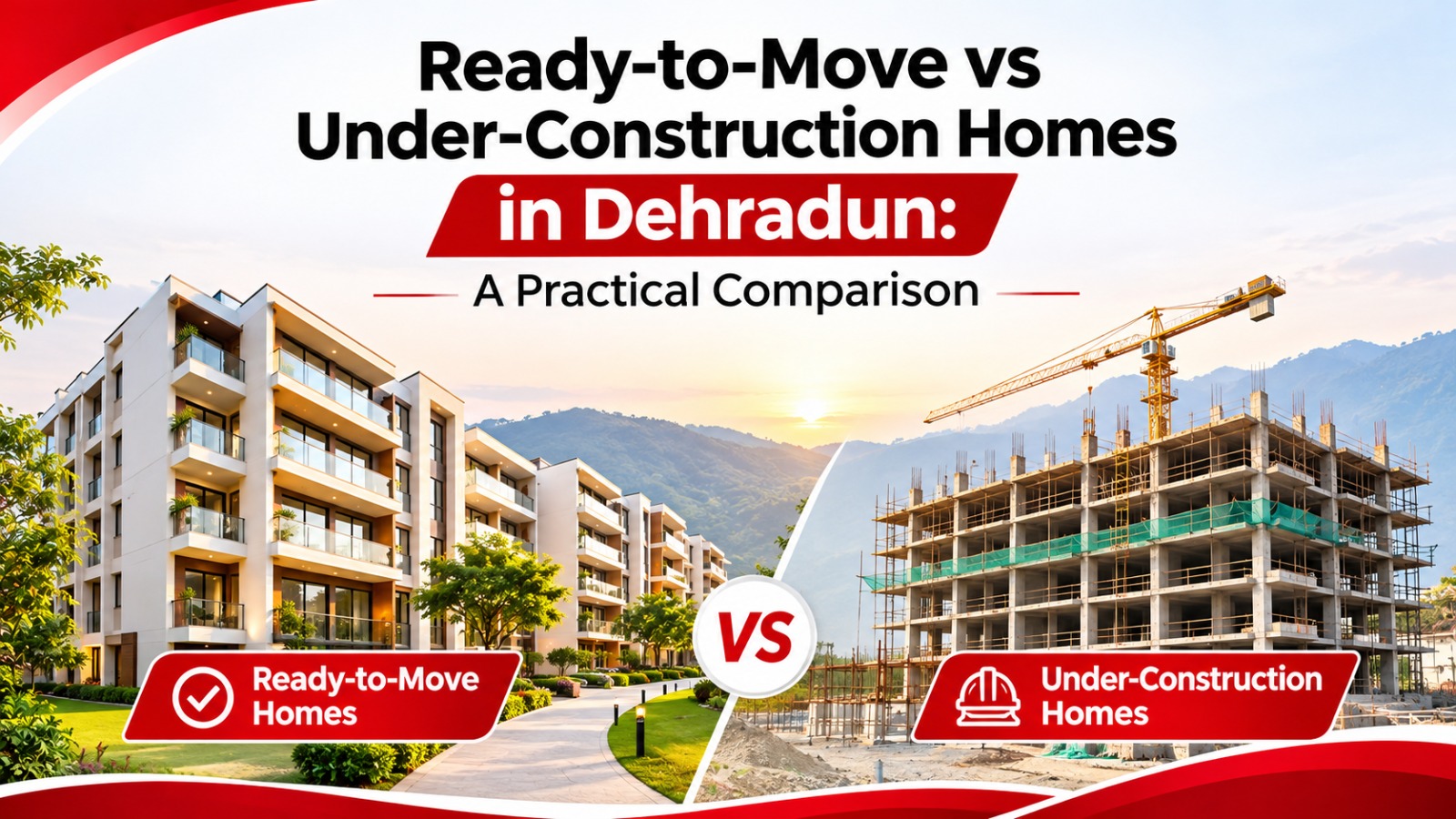
For ready-to-move-in properties, inspect the actual unit you intend to purchase. For under-construction properties, understand the specifications, construction stage, promised facilities, and contractual possession timeline.
8. Look Beyond the Property to Its Surroundings
A home is not limited to its walls and rooms. The neighbourhood plays an equally important role in your everyday lifestyle. Before buying, explore the surrounding area and assess whether it meets your family’s needs.
Consider proximity to:
- Schools and colleges
- Hospitals and medical centres
- Grocery stores and supermarkets
- Banks and ATMs
- Public transport
- Parks and recreational spaces
- Restaurants and shopping centres
- Main roads and important city locations
Also consider the less obvious factors, such as noise levels, road congestion, drainage, street lighting, water availability, and the area’s development pattern. A location that works well for your current lifestyle is often more valuable than one that simply appears attractive on paper.
9. Evaluate Amenities Without Getting Distracted
Modern residential projects often offer a wide range of amenities, including clubhouses, gyms, landscaped gardens, children’s play areas, security systems, and community spaces.
These facilities can improve your living experience, but first-time buyers should prioritise practical needs over impressive marketing features.
Ask yourself:
- Will my family actually use these amenities?
- Are they included in the property price?
- Will additional maintenance charges apply?
- Are the amenities completed or only proposed?
- Will they be maintained properly after possession?
Focus on the features that genuinely improve your daily life. A well-built home with good ventilation, reliable water supply, proper parking, and convenient connectivity may be more useful than a property with numerous facilities that you rarely use.
10. Think About Future Resale and Long-Term Value
Even if you are buying a home to live in, it is sensible to consider its future resale potential. Life circumstances can change. You may move for work, need a larger home, or decide to relocate. A property with strong practical appeal may offer more flexibility in the future.
Factors that can influence resale potential include:
- Location and connectivity
- Quality of construction
- Reputation of the developer
- Property configuration and layout
- Access to essential facilities
- Demand for similar properties in the area
- Maintenance of the building and community
- Legal clarity and documentation
Avoid making decisions based solely on promises of rapid price appreciation. Property values depend on multiple factors, and future returns are never guaranteed.
Common Mistakes First-Time Property Buyers Should Avoid
Buying your first property can be exciting, but emotional decisions sometimes lead to unnecessary financial risks.
Avoid these common mistakes:
- Buying without calculating the complete cost.
- Making a decision based only on attractive photographs or sample flats.
- Ignoring property documents and legal verification.
- Choosing a location without checking daily connectivity.
- Taking a home loan with an uncomfortable EMI.
- Overlooking construction quality and maintenance costs.
- Relying only on a broker’s promises.
- Ignoring the builder’s previous projects.
- Making rushed decisions because of artificial urgency.
- Paying without understanding the terms of the agreement.
A thoughtful and well-researched purchase is usually better than a rushed decision driven by excitement.
First-Time Property Buyer’s Checklist
Before finalising your purchase, use this checklist to make sure you have covered the essential steps.
- Set a realistic budget.
- Calculate the additional purchase costs.
- Shortlist locations based on your lifestyle.
- Compare different property types.
- Visit multiple properties.
- Research the builder or seller.
- Verify legal documents independently.
- Compare home loan offers.
- Inspect construction quality.
- Review the sale agreement carefully.
- Understand possession timelines and payment schedules.
- Confirm maintenance charges and amenities.
- Keep sufficient savings after the purchase.
Is Dehradun a Good Place to Buy Your First Home?
For buyers who value a balanced lifestyle, access to essential services, residential neighbourhoods, and a connection to nature, Dehradun can be a compelling place to purchase a first home.
However, the right property depends on your budget, preferred location, family requirements, work commitments, and long-term plans. Some buyers may prefer a centrally located apartment with easy access to daily conveniences, while others may prioritise spacious homes, quieter surroundings, or future development potential.
The best approach is to compare properties carefully, verify everything before making payments, and choose a home that suits both your current needs and your future lifestyle.
Final Thoughts
Buying your first Property in Dehradun is a major financial and personal decision. With the city’s growing residential appeal and variety of housing options, first-time buyers have opportunities to explore homes that match different budgets and lifestyles.
The key to making the right decision is preparation. Understand your finances, choose the right location, evaluate the property, research the builder, and complete all legal checks before finalising your purchase.
A home should not only look good on the day you buy it; it should continue to serve your needs, provide comfort, and support your lifestyle for years to come. Take your time, ask the right questions, and make your first property purchase with confidence.