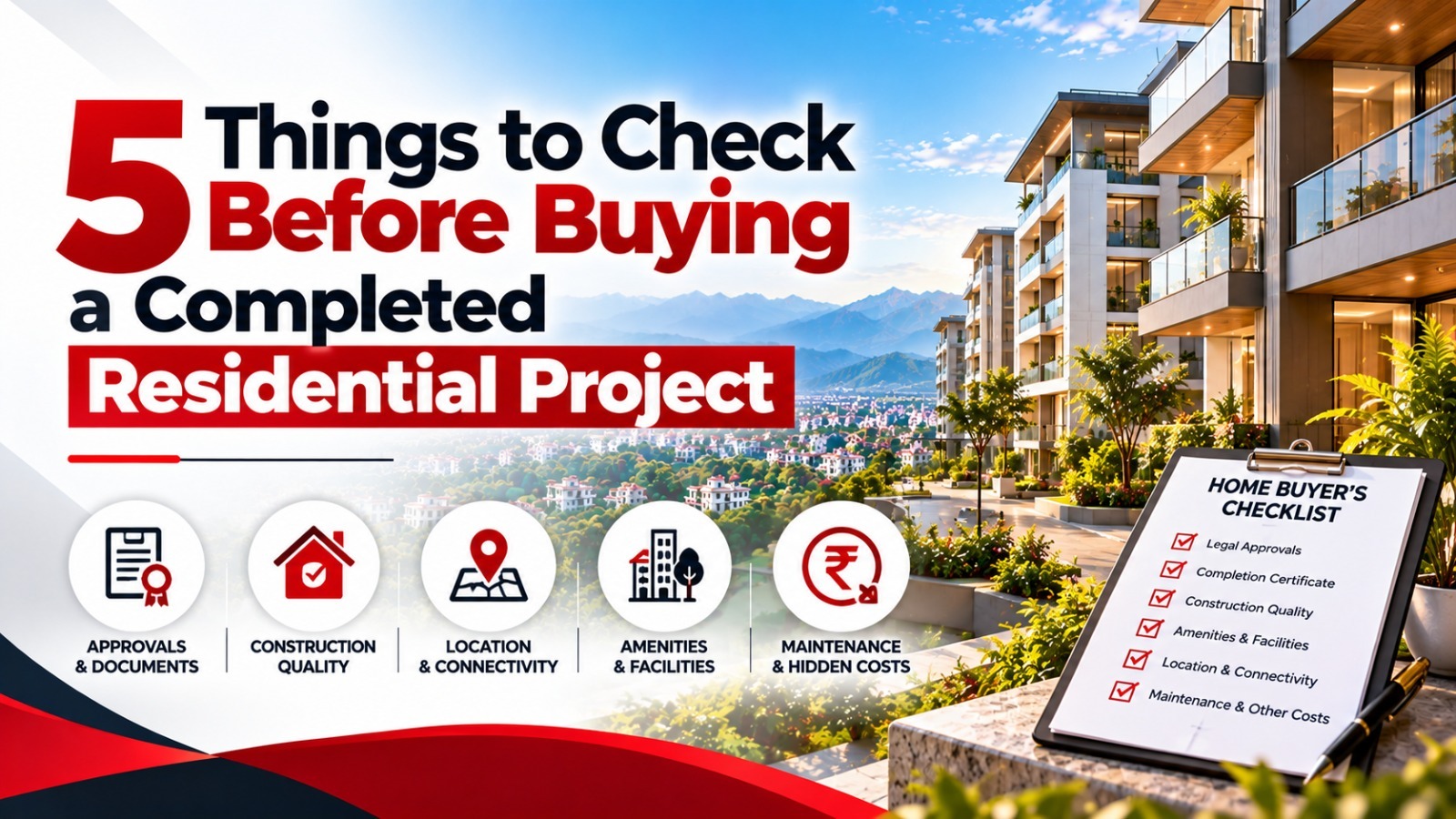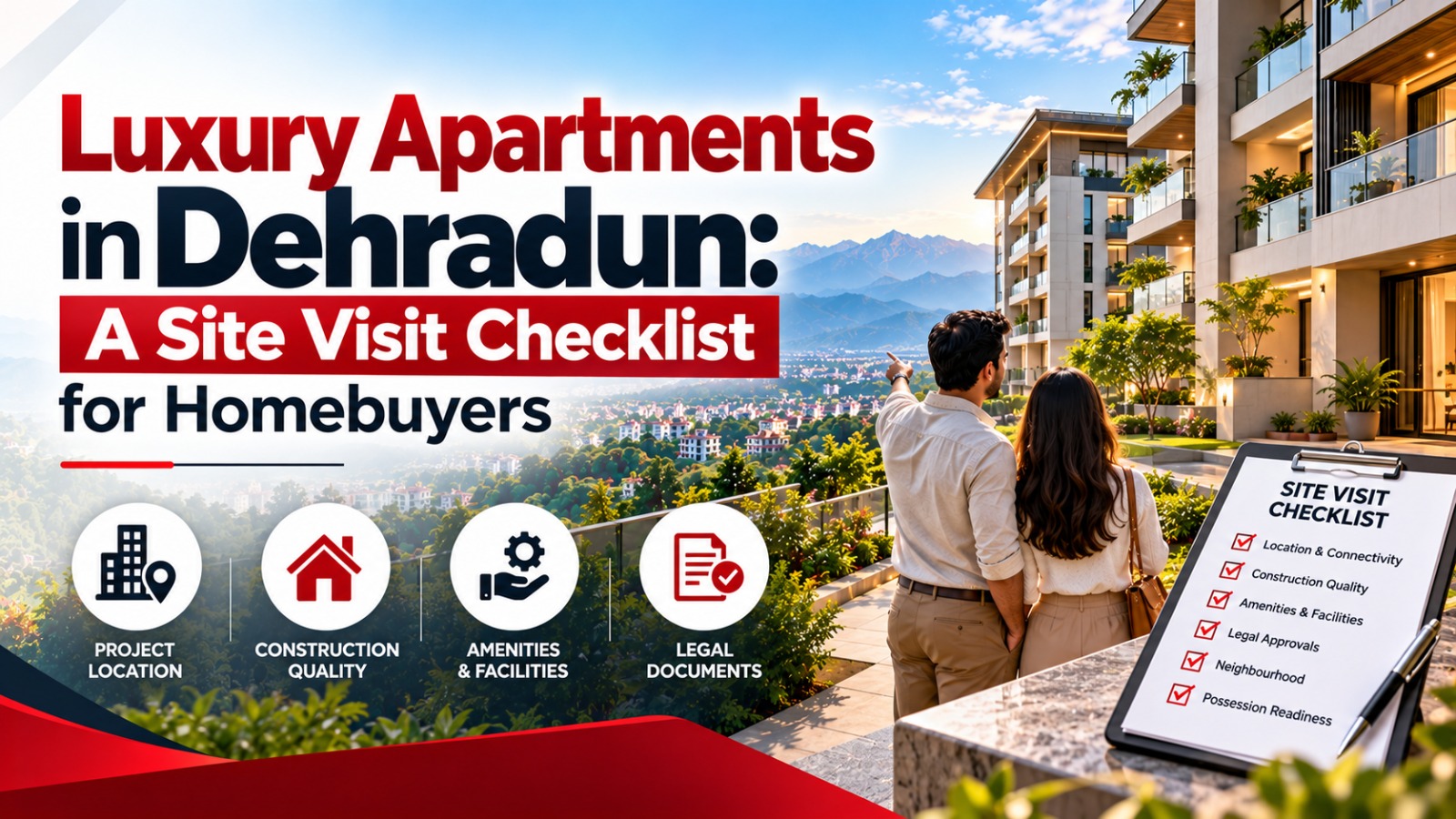
Buying a home is one of the most important financial decisions a person can make. While under-construction properties may appeal to buyers looking at different payment schedules or future development opportunities, completed residential projects offer something valuable: the opportunity to see what you are buying before committing your money.
For homebuyers exploring Residential Projects in Dehradun, a completed property can make it easier to assess construction quality, inspect available amenities, understand the neighborhood, and plan the move. However, a building that looks finished is not automatically legally ready for occupation.
From verifying property documents to checking hidden costs, this guide explains what every homebuyer should know before investing in a completed residential project.
What Is a Completed Residential Project?
A completed residential project is a housing development in which construction has reached the relevant completion stage. Depending on the project and applicable regulations, this may involve completion or occupancy approvals from the competent authority.
Completed properties may include apartments, gated residential communities, independent houses, villas, and other housing developments.
Before considering a property ready for occupation, buyers should confirm that the relevant approvals cover the specific building, tower, phase, or unit being purchased. Physical completion alone is not sufficient proof of legal occupancy.
1. Verify the Legal Documents Before Buying
Legal verification should be one of the first steps when evaluating a completed residential project. It can help identify ownership disputes, missing approvals, outstanding liabilities, and other issues that may complicate the purchase. Ask for the relevant documents and have them reviewed by an independent property lawyer.
Important documents and checks include:
- Title and ownership documents: Confirm that the seller has the legal right to sell the property.
- RERA registration and disclosures: Check the project’s registration and relevant records on the applicable state RERA portal, where required.
- Occupancy Certificate (OC): Verify the applicable permission to occupy the property.
- Completion Certificate (CC): Check the relevant documentation confirming completion under applicable rules.
- Approved building plans: Confirm that the constructed property matches the sanctioned plans and permissions.
- Sale deed or conveyance documents: Understand how ownership will be transferred and registered.
- Outstanding dues: Check applicable property taxes, utility bills, maintenance charges, and other liabilities.
- Encumbrances and disputes: Investigate mortgages, claims, litigation, or restrictions affecting the property.
For projects in Dehradun, verify the relevant approvals with the competent authority and consult the official RERA records applicable to the project.
Remember that a possession letter, marketing brochure, or builder’s verbal assurance is not a substitute for the required approvals and ownership verification.
2. Inspect the Actual Construction Quality
One of the main benefits of a completed residential project is that buyers can examine the actual property rather than relying only on sample flats, floor plans, or promotional images. During a site visit, pay attention to both the apartment and the wider development.
Check the following:
- Walls and ceilings for cracks, dampness, or water seepage.
- Flooring, doors, windows, and installed fittings.
- Plumbing, drainage, water pressure, and electrical connections.
- Natural light, ventilation, and room layout.
- Balconies, railings, and visible signs of deterioration.
- Lifts, staircases, corridors, and common areas.
- Parking arrangements and access roads.
- Water supply, waste management, and available power backup.
If you notice significant defects or have concerns about structural quality, consider hiring a qualified technical inspector or engineer.
Prepare a written list of defects before accepting possession and ask for agreed repairs to be documented.
3. Evaluate the Location and Surrounding Infrastructure
The value of a residential property is influenced by more than the apartment itself. Its location can affect everyday convenience, commuting costs, rental demand, and future resale prospects.
When evaluating Residential Projects in Dehradun, consider the following factors.
- Connectivity: Check access to major roads, public transport, workplaces, and other destinations you visit regularly.
- Essential services: Assess the distance to schools, hospitals, grocery stores, pharmacies, and other everyday facilities.
- Infrastructure quality: Look at road conditions, drainage, water supply, electricity, and waste collection.
- Neighbourhood environment: Visit at different times to understand traffic, noise, parking, and general surroundings.
- Long-term suitability: Consider whether the location will continue to meet your family’s needs over the next several years.
Avoid making a decision based only on proposed infrastructure or future development promises. Verify the status of planned projects and judge the property’s suitability based on current conditions as well.
4. Understand the Total Cost of Ownership
The advertised property price is not the same as the total amount required to purchase and maintain a home. Before finalising a deal, prepare a complete cost estimate that includes all applicable expenses.
| Expense | What to check |
| Property price | Final negotiated price and payment schedule |
| Stamp duty and registration | Applicable government charges |
| Legal verification | Lawyer’s fees and document checks |
| Brokerage | Any agreed brokerage charges |
| Maintenance | Deposits, monthly charges, and common-area costs |
| Parking | Whether parking is included and how it is allocated |
| Interiors and repairs | Painting, furniture, appliances, or required repairs |
| Home loan | Processing fees, interest, and other borrowing costs |
| Outstanding dues | Unpaid charges that must be settled before transfer |
Ask for a written breakdown of the amount payable before signing the agreement. Keep a financial buffer for unexpected repairs and moving expenses. A property that fits your purchase budget may still be difficult to manage if the ongoing costs are too high.
5. Check Amenities and Their Actual Availability
Residential projects often advertise amenities intended to improve residents’ comfort and convenience. However, buyers should confirm which facilities are operational, included, and properly maintained.
Depending on the development, amenities may include:
- Security arrangements and controlled entry.
- Parking facilities.
- Lifts and accessible common areas.
- Landscaped areas and community spaces.
- Fitness or recreational facilities.
- Power backup for specified systems.
- Water management and waste disposal facilities.
Visit the property and inspect these facilities rather than relying solely on brochures. Ask about maintenance responsibilities, monthly charges, facility operating rules, and any planned repairs. Extensive amenities can be attractive, but their ongoing costs should fit your budget.
6. Research the Builder’s Track Record
The reputation and performance of a developer can influence construction quality, documentation, handover, and the resolution of defects.
Before choosing a completed project, research the developer’s previous developments and look for reliable information about their delivery record and customer experience.
Consider these questions:
- Has the developer completed previous projects?
- Were the promised specifications and facilities delivered?
- Are the relevant approvals and documents available?
- Are there unresolved complaints or legal disputes?
- How are maintenance and repair requests handled?
- Are there any outstanding obligations relating to the property?
For resale homes, investigate the current owner’s title and outstanding liabilities as well. Do not rely entirely on online ratings or promotional claims. Combine your research with document verification, site visits, and professional advice.
7. Compare Completed and Under-Construction Properties
Both property types can suit different buyers. The right option depends on your budget, timeline, risk tolerance, and personal preferences.
| Factor | Completed residential project | Under-construction project |
| Property inspection | Actual property can be inspected | Buyers may initially rely on plans and specifications |
| Possession | May be available sooner, subject to approvals and verification | Requires waiting for construction and handover |
| Construction uncertainty | Less uncertainty about unfinished construction if verified | Greater exposure to construction delays |
| Payment planning | Depends on the seller and agreement | May offer construction-linked payment schedules |
| Customisation | Usually more limited | Some choices may be possible, depending on the stage |
| Amenities | Existing facilities can be checked | Some facilities may remain proposed or incomplete |
A completed property is not automatically the cheaper or safer investment. Buyers should compare the legal status, total cost, location, quality, and expected use of each option.
8. Assess Rental Income and Long-Term Investment Potential
Some homebuyers purchase property for personal use, while others consider rental income or long-term appreciation. If you are evaluating a completed residential project as an investment, examine the local market carefully.
- Rental demand: Compare similar properties in the same locality and consider the type of tenants likely to rent there.
- Rental yield: Estimate annual rental income relative to the total investment cost, then account for maintenance, taxes, repairs, and periods without tenants.
- Resale potential: Consider location, building condition, demand, maintenance quality, and ease of transferring ownership.
- Holding period: Decide whether you can hold the property through periods of weaker demand without needing to sell quickly.
- Ongoing expenses: Include maintenance, insurance where applicable, property taxes, and other recurring costs.
Property prices and rental income can fluctuate. Do not base your decision solely on projected appreciation or promised rental returns.
9. Understand Home Loan and Financial Requirements
If you plan to finance your purchase with a home loan, assess your borrowing capacity before committing to the property. Start by reviewing your income, existing obligations, savings, and expected monthly expenses. Compare loan interest rates, processing fees, repayment periods, and other terms offered by lenders.
Before finalising the purchase:
- Calculate an affordable monthly EMI.
- Confirm the down payment required.
- Keep funds available for registration and other transaction costs.
- Check the lender’s property-document requirements.
- Understand the loan’s interest and repayment terms.
- Maintain an emergency fund after making the purchase.
Loan approval does not replace independent legal due diligence. Ensure that the property’s ownership, approvals, and documentation have been reviewed separately.
10. Complete a Final Inspection Before Taking Possession
Before accepting the keys, inspect the property again and confirm that the agreed conditions have been met.
Use this checklist:
- Verify the property’s legal and approval documents.
- Confirm that the correct unit, tower, or phase is covered by the relevant approvals.
- Match the apartment’s specifications with the sale agreement.
- Test plumbing, electrical fittings, and essential services.
- Record defects and obtain written repair commitments.
- Confirm parking allocation and access to promised amenities.
- Check maintenance charges and outstanding dues.
- Review the final payment statement.
- Obtain the required possession and ownership documents.
- Complete the relevant registration and transfer formalities.
Do not rush the handover process because a property appears ready. If documents are missing or significant defects remain unresolved, seek professional advice before proceeding.
Why Choose the Right Residential Project in Dehradun?
Dehradun offers a range of residential options for families, working professionals, and property investors. However, the right home is not simply the one with the most attractive appearance or the lowest advertised price.
Buyers should evaluate location, construction quality, legal compliance, maintenance requirements, and overall affordability before making a decision.
GTM Builders & Promoters is a starting point for buyers researching residential property options. Visit the official website to learn more about the company and its property information. Confirm the availability, location, specifications, pricing, and approvals of any specific project directly with the relevant team.
Frequently Asked Questions
1. What should I check before buying a completed residential project?
Verify ownership documents, applicable RERA disclosures, occupancy and completion approvals, approved building plans, construction quality, amenities, outstanding dues, and the total purchase cost.
2. Is a completed residential project always ready for occupation?
No. Physical completion does not automatically mean that all required approvals have been granted. Verify the relevant occupancy permission and confirm that it covers the specific property or building you intend to buy.
3. What is the difference between a Completion Certificate and an Occupancy Certificate?
A Completion Certificate generally confirms that construction has met the applicable completion requirements. An Occupancy Certificate generally confirms that the building may be occupied under the applicable rules. Requirements and terminology can vary by jurisdiction, so buyers should verify the documents required for their specific property.
4. Are completed residential projects a good investment?
They may suit buyers who want to inspect the actual property or use it sooner. Investment performance depends on the purchase price, location, demand, rental potential, ongoing expenses, legal status, and market conditions.
5. How can I check a residential project’s RERA details?
Visit the applicable state RERA website and search using the project name, registration number, or promoter details. Review the available registration status, disclosures, and relevant project records.
6. What additional expenses should I budget for?
Consider stamp duty, registration, legal fees, brokerage, maintenance deposits, parking charges, interior work, repairs, loan expenses, and outstanding dues where applicable.
7. Should I hire a lawyer before purchasing a completed property?
Independent legal advice is strongly recommended, particularly for verifying title, approvals, encumbrances, sale documents, and outstanding liabilities. A technical inspection may also be useful if there are concerns about construction quality.
Conclusion
Completed residential projects can give homebuyers greater clarity about the property, its construction, and the surrounding neighbourhood before they invest. However, a thorough purchase process still requires legal verification, financial planning, and a careful inspection.
If you are exploring Residential Projects in Dehradun, compare your options, check the relevant approvals, calculate the complete cost, and assess the property’s suitability for your long-term needs.
A well-informed decision can help you choose a home that offers practical value, comfort, and greater confidence in your investment.