Buying a completed residential property can offer several practical advantages for homebuyers. You can inspect the actual apartment, evaluate the surrounding neighbourhood, understand the available amenities, and assess the property’s condition before making a purchase decision.
However, a completed building does not automatically mean that every apartment is ready for immediate occupation or that all legal and technical requirements have been fulfilled. Buyers must carefully examine the property’s documentation, construction quality, essential services, and financial terms before committing.
For people exploring Ready to Move Apartments in Dehradun, a thorough evaluation can help identify potential issues and reduce the risk of unexpected expenses after purchase.
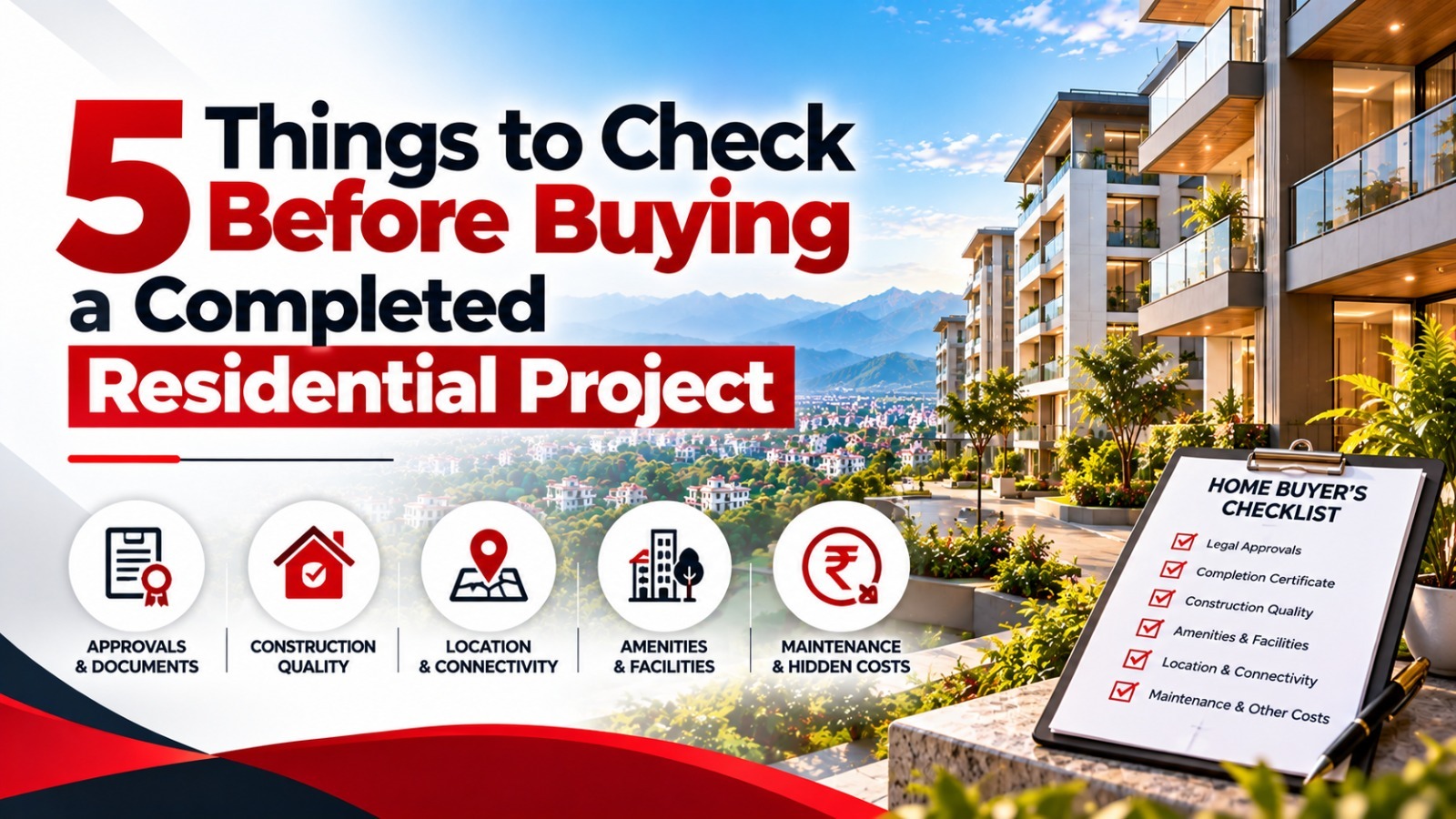
Whether you are purchasing a home for your family or considering a long-term property investment, here are five important things to check before buying a completed residential project.
1. Verify Legal Documents and Project Approvals
Legal verification should be one of the first steps when purchasing a completed residential property. Even if the building is finished and apartments are occupied, buyers should confirm that the property has the necessary documentation and approvals.
Start by reviewing the property’s ownership records and the developer’s documentation with assistance from a qualified property lawyer.
Important checks include:
- Ownership and title: Verify the property’s ownership history and relevant title documents.
- Approved building plans: Confirm that the construction complies with the applicable sanctioned plans and permissions.
- Occupancy certificate: Check the applicable occupancy documentation before planning to move into the property.
- Completion certificate: Verify the relevant completion documentation where required.
- RERA registration: Check the project’s registration and disclosures through the official Uttarakhand RERA resources if the project falls within the applicable requirements of the Real Estate (Regulation and Development) Act, 2016.
- Outstanding liabilities: Ask about any outstanding dues, encumbrances, or obligations affecting the property.
For properties in Dehradun, buyers can also consult the Mussoorie Dehradun Development Authority (MDDA) and other relevant authorities regarding applicable planning permissions.
Do not rely solely on verbal assurances from a seller or developer. Request copies of the relevant documents and obtain independent professional advice if anything is missing or inconsistent.
Why this matters: Proper legal verification helps you understand what you are purchasing and whether the property is suitable for the intended use.
2. Inspect Construction Quality and the Actual Apartment
One of the major advantages of buying a completed residential project is the opportunity to inspect the actual property before finalising the purchase.
Instead of relying only on brochures, floor plans, or sample apartments, examine the specific unit you intend to buy.
Begin with the walls, ceilings, flooring, doors, and windows. Look for visible cracks, damp patches, peeling paint, damaged tiles, and signs of water seepage.
Your inspection should also cover:
- Electrical systems: Test switches, sockets, lighting points, and installed fittings.
- Plumbing: Check taps, flush systems, drainage, and visible pipe connections.
- Kitchen: Inspect cabinets, countertops, sinks, and appliance connections.
- Bathrooms: Check water pressure, drainage, sanitaryware, and ventilation.
- Windows and balconies: Examine locks, seals, railings, and drainage outlets.
- Ventilation: Assess natural light and airflow in the bedrooms and living areas.
If the property has been occupied previously, inspect it for signs of wear, moisture damage, and poorly maintained fittings. Ask for information about repairs or recurring maintenance issues where relevant.
Also compare the apartment with the specifications recorded in the sale agreement. Verify the carpet area, layout, fixtures, and other features that were agreed upon.
If you identify defects, document them with photographs and request clarification about the required repairs before completing the transaction.
3. Evaluate the Location and Available Infrastructure
A completed residential project should be evaluated not only for the quality of its building but also for its surroundings. The location can influence everyday convenience, commuting requirements, and the property’s suitability for long-term living.
When comparing residential projects in Dehradun, examine the neighbourhood during your site visit and assess its existing infrastructure.
Consider these factors:
- Road connectivity: Check access to major roads, public transport, workplaces, and frequently visited areas.
- Essential facilities: Evaluate the distance to schools, hospitals, pharmacies, grocery stores, and local markets.
- Water supply: Ask about the source of water, storage arrangements, and any recurring supply issues.
- Drainage and sanitation: Examine the surrounding roads and drainage arrangements, particularly during the monsoon season.
- Traffic and noise: Visit during peak hours to understand congestion and noise levels.
- Future development: Research officially documented infrastructure projects that may affect accessibility or the surrounding environment.
In Dehradun, buyers may compare locations such as Rajpur Road, Sahastradhara Road, GMS Road, and other established or developing residential areas. The right choice depends on individual priorities, property prices, and the actual facilities available nearby.
Do not assume that a location will become more valuable simply because a new road or infrastructure project has been announced. Evaluate current conditions and distinguish between completed projects, work in progress, and proposed developments.
Why this matters: A well-maintained apartment may still be inconvenient if the surrounding area lacks essential services or suitable connectivity.
4. Check Amenities, Maintenance, and the Total Cost
Completed residential projects may offer amenities such as parking, lifts, security systems, landscaped areas, clubhouses, and recreational facilities. However, buyers should confirm which amenities are actually available and understand the costs associated with maintaining them.
During your visit, inspect the common areas and ask the maintenance team or seller for details about the building’s operating arrangements.
Check the following:
- Availability and condition of lifts.
- Parking allocation and access.
- Security and visitor management.
- Cleanliness of corridors and staircases.
- Functionality of promised recreational amenities.
- Maintenance of common areas.
- Fire-safety arrangements and emergency exits.
- Water supply and power backup provisions.
Request a written breakdown of recurring maintenance charges and clarify which services are included. If the project has a residents’ association or designated maintenance provider, ask about its responsibilities and any outstanding dues relevant to the transaction.
You should also calculate the complete cost of purchasing the apartment, including:
- Agreed property price.
- Applicable stamp duty and registration charges.
- Parking or amenity charges, where applicable.
- Maintenance deposits and recurring fees.
- Home loan processing and financing costs.
- Repairs, interiors, furniture, and appliances.
A property that appears affordable initially may require a significantly higher overall budget once these expenses are included.
Why this matters: Understanding amenities and total ownership costs helps you compare properties more accurately and plan your finances realistically.
5. Review the Builder’s Track Record and Possession Documents
Even when purchasing a completed residential project, the developer’s credibility and the property’s handover documentation remain important.
Research the builder’s previous developments and, where possible, visit completed projects to observe construction quality, maintenance standards, and the condition of shared facilities.
When evaluating real estate builders in Dehradun, consider:
- The developer’s experience with comparable residential projects.
- The quality and condition of completed developments.
- Transparency regarding project specifications and payment terms.
- Responsiveness to reported defects and maintenance concerns.
- Availability of relevant approvals and documentation.
- Clarity about the responsibilities of the developer, seller, and maintenance provider.
Before completing the purchase, review the sale agreement, payment records, possession documents, and applicable warranties. Confirm whether the seller has cleared the relevant dues and whether the documents required for transferring ownership are available.
If the apartment is being purchased directly from a developer, clarify the handover procedure and the process for reporting defects.
If it is a resale property, additional checks may be necessary, including verification of the seller’s ownership, existing loan or encumbrance status, maintenance dues, and the transfer procedure applicable to the property.
A completed building does not guarantee that every legal or financial issue has been resolved. Independent verification remains essential.
Why this matters: A transparent transaction and properly reviewed documentation can help reduce avoidable disputes and clarify the responsibilities of each party.
Additional Tip: Compare Ready-to-Move and Under-Construction Properties
Before finalising your purchase, consider whether a completed property genuinely suits your needs better than an under-construction alternative.
Ready-to-move properties allow buyers to inspect the actual unit and evaluate the existing neighbourhood. They may also allow an earlier move, subject to the property’s legal status and readiness for occupation.
Under-construction properties may offer different layouts, payment schedules, or pricing structures, but they involve construction timelines and additional completion-related uncertainties.
Your decision should depend on your budget, preferred location, timeline, risk tolerance, and the specific property rather than a general assumption that one category is always better.
For homebuyers who need to relocate soon, Ready to Move Apartments in Dehradun may be worth considering, provided the necessary documentation and inspections are completed.
Conclusion
Buying a completed residential project can make the homebuying process more transparent because you can inspect the actual apartment and assess the existing facilities. However, the decision still requires careful research and verification.
Before purchasing, check the legal documents and approvals, inspect construction quality, evaluate the neighbourhood, understand the maintenance expenses, and review the developer’s track record and transaction documents.
If you are exploring residential projects in Dehradun, compare multiple properties and seek qualified legal or technical advice whenever necessary. Taking these precautions can help you identify a home that suits your requirements and avoid unexpected complications after purchase.