Buying a property is one of the biggest financial decisions most people make. Whether you are purchasing a flat, independent house, plot, or commercial property, completing the property registry is an important part of legally recording the transaction.
However, property registration should not be treated as simply signing documents and paying registration charges. Before reaching the registry office, a buyer should verify the property’s ownership, title, approvals, documents, transaction details, and applicable charges.
For buyers purchasing property in Dehradun and other parts of Uttarakhand in 2026, having a structured property registry checklist can help reduce avoidable documentation and verification issues.
Here is what you should check before completing your property registration.
What Is Property Registration?
Property registration is the process through which a property transaction is formally recorded with the relevant government authority.
In a typical sale transaction, the buyer and seller execute a sale deed or another applicable document, pay the required stamp duty and registration charges, and have the document registered according to the applicable legal process.
The exact documentation and procedure can vary depending on the type of property and transaction.
Registration is therefore an important legal step, but it should come after proper due diligence, rather than being treated as the only verification of the property.
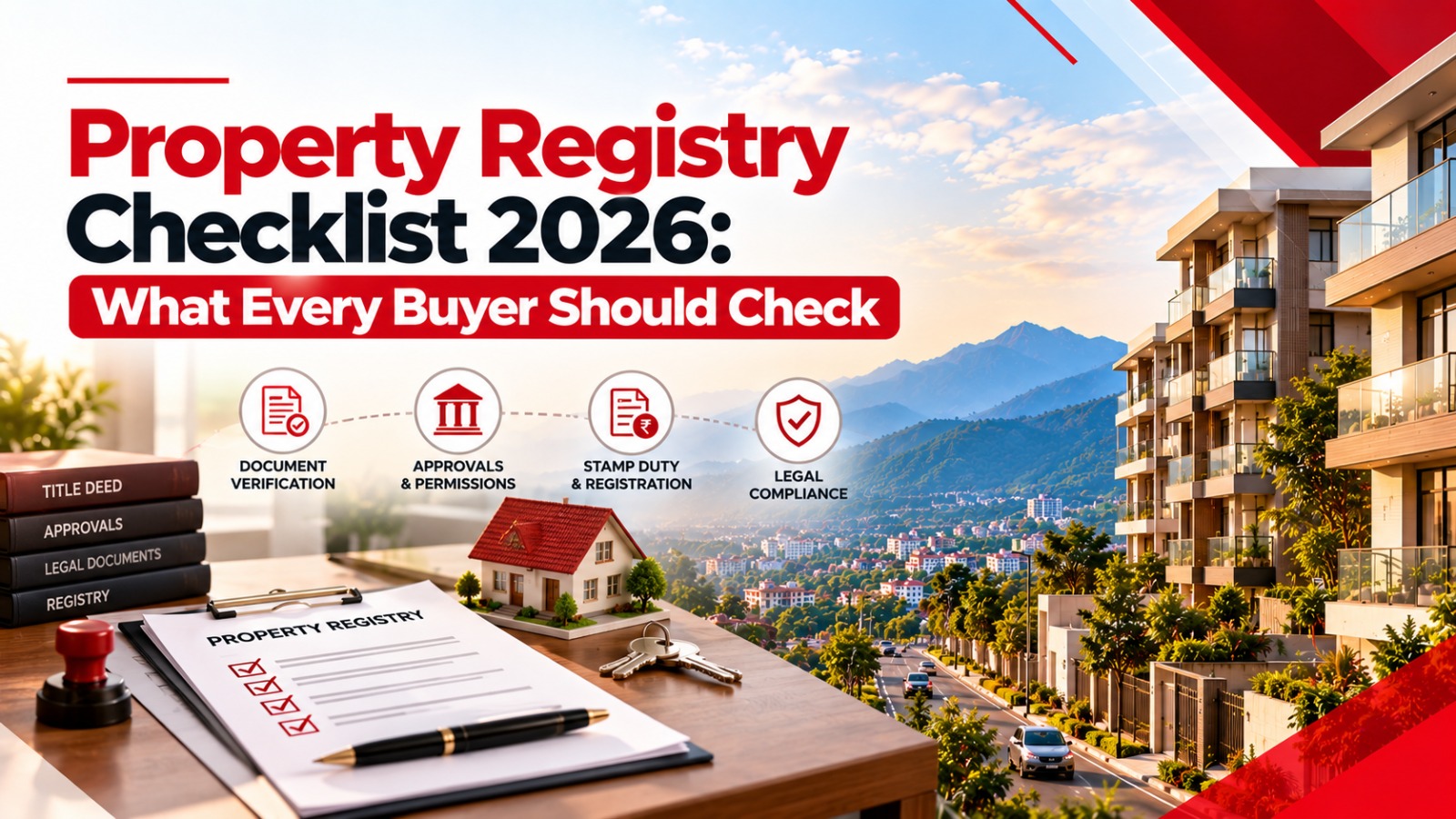
Property Registry Checklist for 2026
Before proceeding with registration, buyers should work through the following checklist.
1. Verify the Seller’s Identity
Start by confirming that the person selling the property is actually the legal owner or has the legal authority to sell it.
Check documents such as:
- PAN card
- Aadhaar or other applicable identity proof
- Address proof
- Ownership documents
- Power of Attorney, if applicable
The seller’s name should match the ownership records and the documents being used for the transaction.
If there are multiple owners, verify the details of all relevant owners and ensure that the required parties participate in the transaction.
2. Check the Property Title
The title is one of the most important aspects of property due diligence.
Ask for documents establishing how the seller acquired the property and verify the chain of ownership where applicable.
Depending on the property, this may involve examining:
- Previous sale deeds
- Conveyance deeds
- Gift deeds
- Partition deeds
- Inheritance documents
- Other title documents
A buyer should be able to understand who owns the property and how ownership was transferred over time.
For significant property purchases, having the title reviewed by an independent property lawyer can be valuable.
3. Check for Existing Loans or Encumbrances
Before registration, determine whether the property has any existing mortgage, loan, charge, dispute, or other encumbrance that could affect the transaction.
If the property was financed through a bank or financial institution, ask for appropriate documentation confirming the status of the loan and release of the lender’s interest, where applicable.
Don’t rely only on the seller’s verbal assurance that the property is debt-free.
Obtain documentary evidence wherever appropriate.
4. Verify the Sale Deed
The sale deed is a critical document in a property transaction.
Before signing, carefully check:
- Buyer’s name
- Seller’s name
- Property description
- Property address
- Survey/khasra or other applicable identification details
- Property area
- Consideration amount
- Payment details
- Possession terms
- Rights being transferred
- Parking details, where applicable
- Other agreed terms
Even a small spelling or numerical error can create problems later.
Read the complete document rather than checking only the first and last pages.
5. Match the Property Details With Official Records
The property mentioned in the sale deed should correspond with the relevant official records.
Check details such as:
- Plot or unit number
- Floor
- Area
- Boundaries
- Survey/khasra number, where applicable
- Building/project details
- Ownership information
If the physical property and documentation don’t match, pause the transaction and seek clarification before proceeding.
6. Verify Building and Project Approvals
If you are purchasing a flat or property within a development project, don’t restrict your due diligence to the sale deed.
Depending on the property, check relevant approvals and documentation, which may include:
- Approved building plans
- Development permissions
- Completion-related documents
- Occupancy-related documents, where applicable
- RERA registration, where applicable
- Other local authority approvals
The specific approvals required depend on the type, location and status of the property.
For a project purchase, buyers should verify the relevant information through official sources wherever possible.
7. Check RERA Details Where Applicable
For applicable real-estate projects, verify the project’s RERA registration details.
Check whether:
- The project is registered
- The developer details match
- The project name and location match
- The unit details are consistent
- The promised possession information is documented
- Relevant disclosures are available
Don’t rely solely on information presented in marketing material.
For buyers in Uttarakhand, the relevant state RERA authority can be used to verify applicable project information.
8. Verify Property Tax and Other Dues
Before purchasing a property, check whether applicable property taxes and other local dues have been cleared.
Depending on the property, this may include:
- Property tax
- Municipal dues
- Maintenance charges
- Utility-related outstanding amounts
- Society or association dues
If outstanding dues exist, clarify who is responsible for paying them before the transaction is completed.
Keep documentary proof of the settlement where appropriate.
9. Check Stamp Duty and Registration Charges
Buyers should understand the applicable stamp duty and registration charges before reaching the registry stage.
The amount can depend on factors such as:
- Property value
- Transaction value
- Property type
- Location
- Applicable government rules
- Buyer-related eligibility or concessions, if any
Don’t calculate your total budget using only the property’s quoted price.
Include applicable government charges and transaction-related expenses in your purchase budget.
10. Verify the Government-Determined Property Value
In many property transactions, government authorities use applicable valuation guidelines or circle rates to determine the minimum value for certain purposes.
The applicable valuation can differ based on:
- Location
- Property type
- Land use
- Construction
- Area
- Other government-defined factors
Before registration, confirm the applicable valuation and understand how it affects stamp duty and registration charges.
11. Check the Property’s Land Use
This is particularly important when purchasing land, commercial property, or property in developing areas.
Confirm that the property’s permitted use is consistent with your intended purpose.
For example, if you intend to use a property for commercial activity, don’t assume that a residential property can automatically be converted into a commercial establishment.
Relevant permissions and land-use regulations should be verified before purchase.
12. Check the Original Documents
Whenever possible, inspect original property documents rather than relying only on photocopies or screenshots.
Important documents may include:
- Previous registered deeds
- Title documents
- Approved plans
- Tax receipts
- Possession-related documents
- NOCs, where applicable
- Loan-release documents, where applicable
If the seller says that an original document is unavailable, ask why and seek appropriate legal advice before proceeding.
13. Verify Power of Attorney Transactions Carefully
If someone is selling property on behalf of the owner, pay particular attention to the Power of Attorney.
Verify:
- Whether the POA is valid
- Who granted it
- Who holds it
- What authority it provides
- Whether it permits the relevant transaction
- Whether it has been revoked or otherwise affected
A POA transaction deserves careful legal verification because the authority to sell must be properly established.
14. Check the Agreement Before the Registry
The agreement and the final sale deed should be consistent.
Compare:
- Property price
- Payment schedule
- Property area
- Unit number
- Possession terms
- Parking
- Fixtures and fittings
- Other negotiated terms
If something has changed, get the change documented properly rather than relying on a verbal promise.
15. Confirm All Payments
Maintain a clear record of every payment made during the transaction.
Keep:
- Bank transfer records
- Cheques
- Payment receipts
- Booking receipts
- Agreement receipts
- Tax-related payment records
- Other transaction documents
Avoid undocumented cash transactions and make sure the payment trail corresponds with the transaction documents.
16. Check the Registry Appointment and Required Documents
Before visiting the registration office, confirm the applicable process and required documents.
Depending on the transaction, you may need:
- Sale deed
- Identity documents
- PAN
- Photographs
- Payment proof
- Stamp duty payment details
- Registration fee details
- Witness information
- Supporting property documents
Requirements can vary, so verify the current requirements with the relevant registration authority before your appointment.
17. Review Every Page Before Signing
Never sign a property document without reading it.
Check every page for:
- Names
- Numbers
- Dates
- Property measurements
- Consideration amount
- Clauses
- Annexures
- Schedules
- Signatures
- Corrections
If you don’t understand a clause, ask your lawyer or another qualified professional to explain it before signing.
Once a document is executed, correcting mistakes can become considerably more complicated.
18. Don’t Ignore the Possession Process
Registration and possession are related but distinct aspects of a property transaction.
If you’re purchasing a newly constructed flat, understand:
- When possession is expected
- Whether required completion/occupancy documentation is available
- What remains pending
- What facilities are operational
- What documents you receive at possession
For resale properties, make sure possession arrangements are clearly documented.
19. Keep a Complete Property File After Registration
Your responsibility doesn’t end after the registry.
Create a secure digital and physical record containing:
- Registered sale deed
- Payment receipts
- Stamp duty documents
- Registration documents
- Tax receipts
- Approved plans
- Possession documents
- Loan documents
- Maintenance records
- Relevant correspondence
Scan important documents and store backup copies securely.
This can make future resale, inheritance, taxation, loan applications, or legal verification easier.
Common Property Registry Mistakes Buyers Should Avoid
Even careful buyers can overlook basic details. Some common mistakes include:
Relying Only on the Builder or Seller
The information provided by a seller or developer should be independently verified wherever possible.
Checking the Price but Not the Documents
A seemingly attractive property price doesn’t compensate for unresolved title or documentation issues.
Skipping Legal Verification
Property transactions can involve complex documents. Independent legal review can help identify issues that a buyer may miss.
Not Checking Previous Ownership
Understanding the property’s ownership history can help identify potential title issues.
Ignoring Additional Costs
Stamp duty, registration, taxes, maintenance, legal fees and other expenses can significantly affect the overall purchase budget.
Signing in a Hurry
A seller or sales representative may create urgency around a deal. Buyers should still complete the necessary due diligence before signing.
Property Registry Checklist: Quick Reference
| Check | What to Verify |
| Seller | Identity and ownership |
| Title | Ownership history and title documents |
| Encumbrance | Loans, charges and claims |
| Sale Deed | Names, price, property details and clauses |
| Property Details | Area, boundaries and identification numbers |
| Approvals | Applicable government/local approvals |
| RERA | Registration and project details, where applicable |
| Taxes | Property tax and other outstanding dues |
| Land Use | Permitted use of the property |
| Valuation | Applicable government valuation/circle rate |
| Stamp Duty | Current applicable charges |
| Registration | Applicable registration fee and procedure |
| Payments | Complete payment trail |
| Possession | Terms and required documentation |
| Documents | Originals and registered copies |
Conclusion
Property registration is an important legal step, but a safe property purchase involves much more than completing the registry.
Before buying a property in 2026, take the time to verify ownership, title, encumbrances, approvals, property details, taxes, valuation, transaction documents and applicable registration requirements.
For buyers considering a flat, house, plot or commercial property in Dehradun, conducting these checks before making the final payment can help create a clearer and more secure buying process.
Most importantly, don’t hesitate to obtain independent legal advice for a significant property transaction. A professional review of the title and documents can help identify issues before they become expensive problems.